
Antimicrobial resistance reference strains
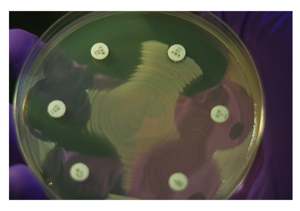 The UK Health Security Agency’s (UKHSA) National Collection of Type Cultures (NCTC), in partnership with the Antimicrobial Resistance and Healthcare Associated Infections (AMRHAI) Reference Unit, provides a comprehensive range of reference strains with characterised antimicrobial resistance mechanisms. The collection includes ESBL-producing and carbapenemase-producing organisms, vancomycin-resistant enterococci (including historic clinical isolates), methicillin-resistant Staphylococcus aureus, and colistin-resistant Escherichia coli and Salmonella enterica. It also features clinically relevant reference isolates, published multidrug-resistance plasmids, and most recently, the addition of UKHSA-PACE AMR research panels, to support antimicrobial research, diagnostics, and quality assurance. All strains are manufactured to ISO 9001:2015 standards and undergo rigorous ISO 17025:2017 accredited quality control and re-authentication testing.
|
β-Lactam Resistance |
Resistance to Last-Line or Critical Antibiotics |
Multi drug-resistance |
|
Genetic Drivers of Resistance Spread |
Additional strains |
|
AMR reference strains
1. Penicillinase without Extended-Spectrum β-Lactamase (ESBL) activity
Penicillinase-producing bacterial strains lacking extended-spectrum β-lactamase (ESBL) activity u β-lactamases that hydrolyze penicillins but do not efficiently hydrolyze extended-spectrum cephalosporins or monobactams, resulting in a narrower β-lactam resistance phenotype compared with ESBL-producing strains.
|
Organism |
NCTC® Strain Reference |
Characteristics |
Other Collection Number |
|---|---|---|---|
|
Escherichia coli |
TEM-1 β-lactamase producer |
|
|
|
β-lactamase producing strain |
ATCC 35218 |
||
|
Staphylococcus aureus |
β-lactamase producing strain |
|
2. Extended-Spectrum β-Lactamases (ESBLs)
Extended-spectrum β-lactamase (ESBL)-producing bacterial strains harbour acquired β-lactamase enzymes, most commonly of the CTX-M, SHV, and TEM families, that hydrolyze extended-spectrum cephalosporins and monobactams, resulting in resistance to a broad range of β-lactam antibiotics and reduced therapeutic options.
|
Organism |
NCTC® Strain Reference |
Characteristics |
Other Collection Number |
|---|---|---|---|
|
Escherichia coli |
TEM-3 ESBL – Transconjugant (control strain isolated in Clermont-Ferrand in 1985)17 |
|
|
|
TEM-10 ESBL – Transconjugant (control strain TEM-10 producer isolated in Chicago in 1988) |
|
|
Organism |
NCTC® Strain Reference |
Characteristics |
Other Collection Number |
|---|---|---|---|
|
Klebsiella pneumoniae |
SHV-18 control strain |
ATCC 700603; CCUG 45421; LMG 20218 |
| Organism | NCTC®Strain Reference | Characteristics | Other Collection Number |
|---|---|---|---|
| Escherichia coli | NCTC 13353 | Strain EO 487. CTX-M-15 ESBL producer. Control strain for group 1 bla CTX-Mmultiplex PCR assays | |
| NCTC 13400 | Strain Tr499 = DH5-β derivative. Source of pEK499 (fully sequenced plasmid GenBank Accession No EU935739) encoding CTX-M-15 enzyme. Fusion of type FII and FIA replicons, and harbours ten antibiotic resistance genes | ||
| NCTC 13441 | Strain EO 499. CTX-M-15 ESBL producer – Uropathogenic strain O25:H4 sequence type (ST) 131. Clinical isolate harbouring sequenced plasmid pEK499 (see NCTC 13400); Strain for group 1 bla CTX-Mmultiplex PCR assays | ||
| NCTC 13450 | Strain Tr516 = DH5-β derivative. Source of pEK516 (fully sequenced plasmid GenBank Accession No EU935738), which encodes CTX-M-15 enzyme.Harbours seven antibiotic resistance genes | ||
| NCTC 13451 | Strain J499 = J53 derivative. Source of pEK499 (fully sequenced plasmid GenBank Accession No EU935739) encoding CTX-M-15 enzyme.Fusion of type FII and FIA replicons, and harbours ten antibiotic resistance genes | ||
| NCTC 13452 | Strain J204 = J53 derivative. Source of pEK204 (fully sequenced plasmid GenBank Accession No EU935740), encoding CTX-M- 3 enzyme. Plasmid pEK204 (93,732-bp) belongs to incompatibility group IncI1, andharbours two antibiotic resistance genes | ||
|
Pseudomonas aeruginosa |
VIM-10 metallo-carbapenemase; VEB-1 ESBL |
|
|
|
PER β-lactamase |
|
3. AmpC β-lactamases
AmpC β-lactamase-producing bacterial strains harbour chromosomal or plasmid-mediated ampC genes encoding cephalosporinases that hydrolyze a broad range of β-lactam antibiotics, including many cephalosporins, resulting in reduced susceptibility and potential treatment failure.
|
Organism |
NCTC®Strain Reference |
Characteristics |
Other Collection Number |
|---|---|---|---|
|
Enterobacter cloacae |
Strain 684. Inducible AmpC β-lactamase, wild type. Strain for AmpC detection tests |
|
|
|
Strain 684-con. AmpC β-lactamase de- repressed (i.e. constitutivehyper- producing) mutant of NCTC 13405. Strain for AmpC detection tests |
|
||
|
Escherichia coli |
Plasmid-mediated AmpC betalactamase, subgroup CIT (ESBL-M), also resistant to quinolones, trimethoprim |
CCUG 58543 |
4. Carbapenemases
Carbapenemase-producing bacterial strains harbour acquired carbapenemase enzymes, such as KPC, NDM, VIM, IMP, or OXA-type β-lactamases, that hydrolyze carbapenems and other β-lactam antibiotics, resulting in broad-spectrum resistance and severely limiting therapeutic options.
| Organism | NCTC®Strain Reference | Characteristics | Other Collection Number |
|---|---|---|---|
| Enterobacter asburiae | NCTC 14055 | FRI-2 non-metallo-carbapenemase | |
| Enterobacter cloacae | NCTC 14322 | KPC-4 non-metallo-carbapenemase | |
| Enterobacter cloacae complex | NCTC 13922 | NMC-A non-metallo-carbapenemase | |
| NCTC 13925 | IMI-2 non-metallo-carbapenemase | ||
| NCTC 14336 | KPC-2 non-metallo-carbapenemase | ||
| Escherichia coli | NCTC 13919 | GES-5 non-metallo-carbapenemase | |
| NCTC 14320 | KPC non-metallo-carbapenemase; IMP metallo-carbapenemase; OXA-48-like non-metallo-carbapenemase | ||
| NCTC 14321 | KPC non-metallo-carbapenemase; OXA-48-like non-metallo-carbapenemase | ||
| Klebsiella pneumoniae | NCTC 13438 | KPC-3 non-metallo-carbapenemase; member of the international ST258 clone | |
| NCTC 14327 | KPC-3 non-metallo-carbapenemase | ||
| NCTC 14384 | KPC-33 non-metallo-carbapenemase; produces KPC-33 variant with D179Y substitution that confers resistance to ceftazidime/avibactam | ||
| Serratia marcescens | NCTC 13920 | SME-4 non-metallo-carbapenemase |
| Organism | NCTC® Strain Reference | Characteristics | Other Collection Number |
|---|---|---|---|
| Citrobacter freundii | NCTC 14089 | GIM-1 metallo-carbapenemase | |
| Enterobacter cloacae | NCTC 14326 | VIM-1 metallo-carbapenemase | |
| NCTC 14328 | VIM-4 metallo-carbapenemase | ||
| Escherichia coli | NCTC 13476 | IMP-type metallo-carbapenemase | CCUG 68729 |
| NCTC 14320 | IMP metallo-carbapenemase; KPC non-metallo-carbapenemase; OXA-48-like non-metallo-carbapenemase | ||
| NCTC 14325 | NDM-7 metallo-carbapenemase | ||
| NCTC 14333 | NDM-4 metallo-carbapenemase | ||
| NCTC 14339 | NDM-5 metallo-carbapenemase9 | ||
| Klebsiella pneumoniae | NCTC 13439 | VIM-1 metallo-carbapenemase; QnrS1 (outbreak strain)10 | |
| NCTC 13440 | VIM-1 metallo-carbapenemase; QnrS1 (sporadic)10 | ||
| NCTC 13443 | NDM-1 metallo-carbapenemase | CCUG 68728 | |
| NCTC 14323 | NDM-1 metallo-carbapenemase; OXA-48 non-metallo-carbapenemase | ||
| NCTC 14331 | NDM-1 metallo-carbapenemase | ||
| NCTC 14332 | NDM-1 metallo-carbapenemase; OXA-232 non-metallo-carbapenemase | ||
| NCTC 14334 | IMP-4 metallo-carbapenemase | ||
| NCTC 14337 | IMP-1 metallo-carbapenemase | ||
| Pseudomonas aeruginosa | NCTC 13437 | VIM-10 metallo-carbapenemase; VEB-1 ESBL7 | |
| NCTC 13921 | SPM-1 metallo-carbapenemase | ||
| NCTC 14361 | SIM metallo-carbapenemase | ||
| Pseudomonas guariconensis | NCTC 14056 | DIM-1 metallo-carbapenemase | |
| Salmonella Seftenberg | NCTC 13953 | NDM-1 metallo-carbapenemase |
| Organism | NCTC® Strain Reference | Characteristics | Other Collection Number |
|---|---|---|---|
| Acinetobacter baumannii | NCTC 13301 | OXA-23 (and OXA-51-like)non-metallo-carbapenemases | |
| NCTC 13302 | OXA-25 (OXA-24/40-like) (and OXA-51-like) non-metallo-carbapenemases | ||
| NCTC 13303 | OXA-26 (and OXA-51-like)non-metallo-carbapenemases | ||
| NCTC 13304 | OXA-27 (and OXA-51-like)non-metallo-carbapenemases | ||
| NCTC 13305 | OXA-58 (and OXA-51-like)non-metallo-carbapenemases | ||
| NCTC 13420 | OXA-51-like non-metallo-carbapenemase (SE clone genotype) | ||
| NCTC 13421 | OXA-23 and OXA-51-like non-metallo-carbapenemases (Clone 2 genotype) | ||
| NCTC 13422 | OXA-51-like non-metallo-carbapenemase (NW clone genotype) | ||
| NCTC 13423 | OXA-51-like non-metallo-carbapenemase (T strain, UK3) | ||
| NCTC 13424 | OXA-23 and OXA-51-like non-metallo-carbapenemases (Clone 1 genotype) | ||
| Escherichia coli | NCTC 14320 | OXA-48-like non-metallo-carbapenemase IMP metallo-carbapenemaseKPC non-metallo-carbapenemase | |
| NCTC 14321 | OXA-48-like non-metallo-carbapenemase KPC non-metallo-carbapenemase | ||
| NCTC 14324 | OXA-484 non-metallo-carbapenemase | ||
| NCTC 14329 | OXA-244 non-metallo-carbapenemase | ||
| NCTC 14338 | OXA-48 non-metallo-carbapenemase | ||
| Klebsiella pneumoniae | NCTC 13442 | OXA-48 non-metallo-carbapenemase (Sequence type 353)17 | CCUG 68727 |
| NCTC 14323 | OXA-48 non-metallo-carbapenemase NDM-1 metallo-carbapenemase | ||
| NCTC 14330 | OXA-181 non-metallo-carbapenemase | ||
| NCTC 14332 | OXA-232 non-metallo-carbapenemase NDM-1 metallo-carbapenemase | ||
| NCTC 14335 | OXA-232 non-metallo-carbapenemase | ||
| SalmonellaTyphimurium | NCTC 13954 | OXA-48 non-metallo-carbapenemase pOXA-48a-like plasmid positive |
5. Colistin resistance
Colistin-resistant bacterial strains harbour chromosomal mutations and/or acquired resistance determinants, such as mcr genes, that modify the lipopolysaccharide target of colistin and reduce antibiotic binding, resulting in decreased susceptibility to this last-resort antimicrobial agent.
| Organism | NCTC® Strain Reference | Characteristics | Other Collection Number |
|---|---|---|---|
| Acinetobacter colistiniresistens | NCTC 14468 | Intrinsically phenotypically colistin resistant | CNCTC 7573 |
| Escherichia coli | NCTC 13846 | Colistin resistant, mcr-1 positive | DSM 105182 |
| SalmonellaTyphimurium | NCTC 13952 | Colistin resistant, mcr-1 positive |
6. Linezolid resistance
Linezolid-resistant bacterial strains habour chromosomal mutations and/or acquired resistance determinants, such as cfr, optrA, or poxtA, that alter the antibiotic target or confer ribosomal protection, thereby reducing susceptibility to linezolid and compromising the treatment of multidrug-resistant Gram-positive infections.
7. Vancomycin Resistant Enterococci
Vancomycin-resistant enterococci (VRE) are Enterococcus strains that have acquired vancomycin resistance determinants, most commonly vanA or vanB, resulting in altered cell wall peptidoglycan precursors that reduce vancomycin binding and compromise the efficacy of glycopeptide therapy.
| Organism | NCTC® Strain Reference | Characteristics | Other Collection Number |
|---|---|---|---|
| Enterococcus casseliflavus | NCTC 12361 | VanC-type glycopeptide resistance (low-level, intrinsic to species) | ATCC 25788,CCM 2478,CCUG 18657,CIP 103018,DSM 20680 |
| Enterococcus faecalis | NCTC 12201 | First VRE reported in the UK,VanA-type glycopeptide resistance | |
| NCTC 12203 | First VRE reported in the UK,VanA-type glycopeptide resistance | ||
| NCTC 13379 | VanB-type glycopeptide resistance | ATCC 51299; CIP104676; WDCM 00085;WDCM 00152 | |
| NCTC 13779 | VanA-type glycopeptide resistance. Contemporary hospital-adapted VRE lineage. Clinical isolate from bacteraemia, 200719 | ||
| NCTC 13780 | VanA-type glycopeptide resistance. Contemporary hospital-adapted VRE lineage. Clinical isolate from bacteraemia, 200619 | ||
| Enterococcus faecium | NCTC 12202 | First VRE reported in the UK,VanA-type glycopeptide resistance | |
| NCTC 12204 | First VRE reported in the UK,VanA-type glycopeptide resistance |
8. Methicillin-Resistant Staphylococcus aureus
Methicillin-resistant Staphylococcus aureus (MRSA) strains harbour the mecA or mecC gene, which encodes an altered penicillin-binding protein (PBP2a) with reduced affinity for β-lactam antibiotics, resulting in resistance to methicillin and most other β-lactam agents.
| Organism | NCTC® Strain Reference | Characteristics | Other Collection Number |
|---|---|---|---|
| Staphylococcus aureus | NCTC 13142 | EMRSA-15 strain. Epidemic MRSA from UK, mecA positive | |
| NCTC 13435 | PVL-positive community acquired MRSA strain belonging to clonal complex 80, commonly known as the so-called European clone of community acquired MRSA | ||
| NCTC 13552 | Strain LGA251. Positive for themecA homologue, mecC | ||
| NCTC 13656 | PVL-negative community acquired MRSA strain belonging to clonal complex 59, a clone that originated in East Asia. Positive for the mupA gene conferring high-level resistance to mupirocin | ||
| NCTC 14245 | PVL-positive community acquired MRSA. A USA300 strain, a lineage of community acquired MRSA dominant in the USA | ||
| mecC positive MRSA strains from human clinical background |
9. Multidrug Resistance Plasmids
Multidrug resistance (MDR) plasmid-bearing bacterial strains harbour mobile plasmids carrying multiple antimicrobial resistance genes that can confer resistance to several antibiotic classes simultaneously and facilitate horizontal gene transfer between bacterial species.
| Organism | NCTC® Strain Reference | Characteristics | Other Collection Number |
|---|---|---|---|
| Escherichia coli | NCTC 13400 | Strain Tr499 = DH5-β derivative. Source of pEK499 (fully sequenced plasmid GenBank Accession No EU935739).Fusion of type FII and FIA replicons, and harbours ten antibiotic resistance genes | |
| NCTC 13451 | Strain J499 = J53 derivative. Source of pEK499 (fully sequenced plasmid GenBank Accession No EU935739).Fusion of type FII and FIA replicons, and harbours ten antibiotic resistance genes | ||
| NCTC 13450 | Strain Tr516 = DH5-β derivative. Source of pEK516 (fully sequenced plasmid GenBank Accession No EU935738). Harbours seven antibiotic resistance genes | ||
| NCTC 13452 | Strain J204 = J53 derivative. Source of pEK204 (fully sequenced plasmid GenBank Accession No EU935740), encoding CTX-M-3 enzyme. Plasmid pEK204 (93,732-bp) belongs toincompatibility group IncI1, and harbours two antibiotic resistance genes |
10. Plasmid-mediated Fluoroquinolone Resistance
Plasmid-mediated fluoroquinolone-resistant bacterial strains harbour transferable plasmid-borne resistance determinants, such as qnr, aac(6′)-Ib-cr, or qepA genes, that reduce fluoroquinolone susceptibility and facilitate the horizontal dissemination of resistance among bacterial populations
|
Organism |
NCTC® Strain Reference |
Characteristics |
Other Collection Number |
|---|---|---|---|
| Escherichia coli | NCTC 13400 | aac(6’)-Ib-cr aminoglycoside acetyltransferase | |
| NCTC 13441 | aac(6’)-Ib-cr aminoglycoside acetyltransferase | ||
| NCTC 13450 | aac(6’)-Ib-cr aminoglycoside acetyltransferase | ||
| NCTC 13451 | aac(6’)-Ib-cr aminoglycoside acetyltransferase | ||
| Klebsiella pneumoniae | NCTC 13439 | VIM-1 metallo-carbapenemase; QnrS1 (outbreak strain) | |
| NCTC 13440 | VIM-1 metallo-carbapenemase; QnrS1 (sporadic) |
11. UKHSA-PACE AMR panels to support the development and evaluation of new antimicrobial therapeutics
Working in partnership with the UKHSA’s Antimicrobial Resistance and Healthcare Associated Infections Reference Unit (AMRHAI) and Pathways to Antimicrobial Clinical Efficacy (PACE) (a collaboration between Innovate UK, LifeArc, and Medicines Discovery Catapult), NCTC now offers 5 contemporary Gram-negative AMR strain panels to support the development and evaluation of new antimicrobial therapeutics and diagnostics.
The panels comprise 145 clinically relevant isolates, including 30 each of Escherichia coli, Klebsiella pneumoniae, carbapenem resistant Pseudomonas aeruginosa, carbapenem resistant Acinetobacter baumannii and 25 isolates representing other clinically important Enterobacter spp. All 145 isolates have been characterised both phenotypically, through antibiotic susceptibility profiling, and genotypically, through whole-genome sequencing, with accompanying data made publicly available. The panels encompass global contemporary clinically relevant and diverse isolates, including globally circulating sequence types and important AMR profiles obtained through the AMRHAI reference laboratory. Selection reflects resistance–pathogen combinations identified as priorities by the World Health Organization (WHO), alongside Gram-negative pathogens, lineages and resistance profiles associated with drug-resistant infections across high-burden clinical syndromes, including urinary tract infections (UTIs), respiratory tract infections (RTIs) and bloodstream infections (BSIs) and sepsis.
The E. coli panel comprises 30 isolates representing 14 different sequence types (ST) including the globally disseminated high-risk hypervirulent clones ST131, ST38, ST167, ST648 and ST405. The panel includes isolates representing the two E. coli resistance combinations classified by WHO as critical priority: carbapenem-resistant E. coli and third-generation cephalosporin-resistant E. coli. 21 isolates harbour an acquired carbapenemase gene representing 5 carbapenemase gene families (NDM, OXA-48-like, KPC, IMP and VIM). Eight isolates have an extended-spectrum β-lactamase (ESBL) with CTX-M-15 being the predominant type. The panel consists of 2 isolates that are susceptible to aztreonam and 2 isolates that remained resistant to aztreonam in combination with avibactam.
The K. pneumoniae panel comprises 30 isolates representing 15 sequence types, including international high risk MDR clones ST147, ST11, ST307 and ST101. The panel includes isolates representing the 2 K. pneumonaie resistance combinations classified by WHO as critical priority: carbapenem-resistant and 3rd generation cephalosporin-resistant K. pneumoniae. 26 isolates harbour acquired carbapenemase genes, with 29 genes identified across the panel and 3 isolates carrying multiple carbapenamases. Three isolates harbour ESBLs. The panel also includes the hypervirulent ST23 lineage associated with carbapenemase production. The majority of the isolates are resistant to aminoglycosides.
All 30 isolates in the A. baumannii panel are carbapenenem resistant, representing the WHO critical-priority pathogen-resistance combination of carbapenem-resistant A-baumannii (CARB). The panel captures substantial diversity in carbapenem resistance mechanisms with a total of 73 carbapenemase genes identified across 6 carbapenemase gene families including intrinsic OXA-51-like carbapenemases and acquired carbapenemase families OXA-23-like, OXA-58-like, OXA-24-like, NDM and IMP. 14 isolates carry more than one acquired carbapenemase gene with one carrying 3. The panel includes isolates both susceptible and resistant to the last resort antibiotic colistin.
All 30 isolates in the P. aeruginosa panel are carbapenem-resistant, representing the WHO high-priority pathogen-resistance combination of carbapenem-resistant P. aeruginosa. The panel is highly diverse, comprising 23 sequence types including the globally disseminated high risk clone ST235. 16 isolates have an acquired carbapenemase gene with 14 isolates carrying MLB type carbapenemase. The other 14 isolates demonstrate resistance profiles consistent with other important mechanisms, including depressed AmpC activity, increased expression of efflux pumps and/or decreased expression of outer membrane porin OprD. 23 isolates are resistant to ciprofloxacin and 18 are resistant to amikacin.
The mixed Enterobacterales panel extends the collection to additional Gram-negative pathogens that are important causes of drug-resistant infections across high-burden clinical syndromes including isolates with resistance profiles within the WHO critical priority categories of carbapenem-resistant and 3rd-generation cephalosporin-resistant Enterobacterales. The panel comprises 25 isolates consisting of 5 Proteus mirabilis, 5 Morganella morganii, 5 Serratia marcescens, 2 Citrobacter koseri, 3 Citrobacter freundii, 4 Enterbacter hormaechei and 1 Enterbacter kobei. This panel consists of 15 STs including clinically predominant C. freundii type ST22, and high-risk P. mirabilis clone ST135 associated with extensive MDR. 15 isolates harbour a carbapenemase gene representing 4 carbapenemase gene families, while 4 isolates are ESBL carriers.
12. Additional strains
Bacterial strains with other antimicrobial resistance (AMR) characteristics harbour diverse, clinically relevant resistance mechanisms, including plasmid-mediated metronidazole resistance, penicillin resistance, methicillin and rifampicin co-resistance, or resistance to macrolides, lincosamides, and tetracyclines, resulting in reduced susceptibility to one or more key antimicrobial classes and presenting varied therapeutic challenges.